Thursday, February 11, 2016

Presenting 44 Autographs of Famous Indians..!!

Have you Ever Wondered to Collect some of Famous India Legends Autographs at one Place?? Here is Your Chance. Presenting 44 Autographs of Famous Indians..!!

1) Narendra MODI: Present Prime Minister of India

Narendra_Modi.svg

2)Sachin Ramesh Tendulkar : Former Indian Cricketer, World Cup Winning Team Member

Sachin Tendulkar

3) APJ Abdul Kalam: Former President of India

A PJ Abdul Kalaam

4) Shah Rukh Khan : Bollywood Superstar

shahrukh1

5) Amitab Bachchan : Legendary Actor

Amitabh Bachchan

6) Aishwarya Rai Bachchan

Aishwarya_Rai_Bachchan.svg

7)Aamir Khan

Aamir Khan

8) Salman Khan

Salman Khan

9)Lata Mangeshkar

Lata Mageshkar

10)Asha Bosle

Asha Bhosle

11)Atal Bihari Vajpayee

Atal Bihari Vajpayee

12) Abdul Kalaam Azad

Abdul Kalaam Azad

13)Amartya Sen

Amartya Sen

14)Bala Gangadhar Tilak

Bal Gangadhar Tilak

15)Bipin Chandra Pal

Bipin Chandra Pal

16)Bismillah Khan

Bismillah Khan

17)BR Ambedkar

BR Ambedkar

18)CK Naidu

CK Nayudu

19) CV Raman

CV Raman

20) Dev Anand

Dev Anand

21)Zakir Hussain

Dr. Zakir Hussain

22)Gopala Krishna Gokhale

Gopal Krishna Gokhale

23)Hargobind Khurana

Hargobind Khurana

24)Indira Gandhi

Indira Gandhi

25)J RD Tata

J RD Tata

26) Jawaharlal Nehru

Jawaharlal Nehru

27)Koneru Humpy

Koneru Humpy

28)Manmohan Singh

Manmohan Singh

29)MK Gandhi

MK Gandhi

30)Morarji Desai

Morarji Desai

31)Mother Teresa

Mother Teresa

32)Mukesh Ambani

mukesh

33)Pandit Ravi Shankar

Pandit Ravi Shankar

34)Rabindranath Tagore

Rabindranath Tagore

35)Rahul Bajaj

Rahul Bajaj

36)Raj Kapoor

Raj Kapoor

37)Rajiv Gandhi

Rajiv Gandhi

38)Ratan Tata

Ratan Tata

39)S Radhakrishnan

S Radhakrishnan

40)Sarojini Naidu

Sarojini Naidu

41)Swamy Vivekananda

Swamy Vivekananda

42)Tanguturi Prakasam Pantulu

Tanguturi Prakasam Pantulu

43)Vishwanathan Anand

Vishwanathan Anand

And Finally The Most Famous Signature of INDIA one and onlyRAHUL GANDHI:

Rahul_Gandhi.svg

10 Unknown Facts About Lord Shiva No One Knows!


10 Unknown Facts About Lord Shiva No One Knows!


The epithet Nīlakaṇtha (Sanskrit नीलकण्ठ; nīla = "blue", kaṇtha = "throat"). Since Shiva drank the Halahala poison churned up from the Samudra Manthan to eliminate its destructive capacity. Shocked by his act, Goddess Parvati strangled his neck and hence managed to stop it in his neck itself and prevent it from spreading all over the universe, supposed to be in Shiva's stomach. However the poison was so potent that it changed the color of his neck to blue.

The Sanskrit word Shiva comes from Shri Rudram Chamakam of Taittiriya Samhita of Krishna Yajurveda. The root word śi means auspicious. In simple English transliteration it is written either as Shiva or Siva. The adjective śiva, is used as an attributive epithet not particularly of Rudra, but of several other Vedic deities. ....... Title has been given since some of these facts may be shocking for someone, soothing for devotees and interesting for others. Some of these facts may be known to someone but unknown to other.


Shiva as we know him today shares many features with the Vedic god Rudra, and both Shiva and Rudra are viewed as the same personality in Hindu scriptures. The two names are used synonymously. Rudra, the god of the roaring storm, is usually portrayed in accordance with the element he represents as a fierce, destructive deity.

The Vedic beliefs and practices of the pre-classical era were closely related to the hypothesised Proto-Indo-European religion, and the Indo-Iranian religion. According to Anthony, the Old Indic religion probably emerged among Indo-European immigrants in the contact zone between the Zeravshan River (present-day Uzbekistan) and (present-day) Iran. It was "a syncretic mixture of old Central Asian and new Indo-European elements", which borrowed "distinctive religious beliefs and practices" from the Bactria–Margiana Culture. At least 383 non-Indo-European words were borrowed from this culture, including the god Indra and the ritual drink Soma. According to Anthony, Many of the qualities of Indo-Iranian god of might/victory, Verethraghna, were transferred to the adopted god Indra, who became the central deity of the developing Old Indic culture. Indra was the subject of 250 hymns, a quarter of the Rig Veda. He was associated more than any other deity with Soma, a stimulant drug (perhaps derived from Ephedra) probably borrowed from the BMAC religion. His rise to prominence was a peculiar trait of the Old Indic speakers.

Shiva's particular weapon is the trident. His Trisul that is held in His right hand represents the three Gunas— Sattva, Rajas and Tamas. That is the emblem of sovereignty. He rules the world through these three Gunas. The Damaru in His left hand represents the Sabda Brahman. It represents OM from which all languages are formed. It is He who formed the Sanskrit language out of the Damaru sound.


Adi Sankara, in his interpretation of the name Shiva, the 27th and 600th name of Vishnu sahasranama, the thousand names of Vishnu interprets Shiva to have multiple meanings: "The Pure One", or "the One who is not affected by three Gunas of Prakrti (Sattva, Rajas, and Tamas)" or "the One who purifies everyone by the very utterance of His name." Swami Chinmayananda, in his translation of Vishnu sahasranama, further elaborates on that verse: Shiva means "the One who is eternally pure" or "the One who can never have any contamination of the imperfection of Rajas and Tamas".

There are at least eight different versions of the Shiva Sahasranama, devotional hymns (stotras) listing many names of Shiva. The version appearing in Book 13 (Anuśāsanaparvan) of the Mahabharata is considered the kernel of this tradition. Shiva also has Dasha-Sahasranamas (10,000 names) that are found in the Mahanyasa. The Shri Rudram Chamakam, also known as the Śatarudriya, is a devotional hymn to Shiva hailing him by many names.

Shiva's role as the primary deity of Shaivism is reflected in his epithets Mahādeva ("Great god"; mahā "Great" and deva "god"), Maheśvara ("Great Lord"; mahā "great" and īśvara "lord"), and Parameśvara ("Supreme Lord").

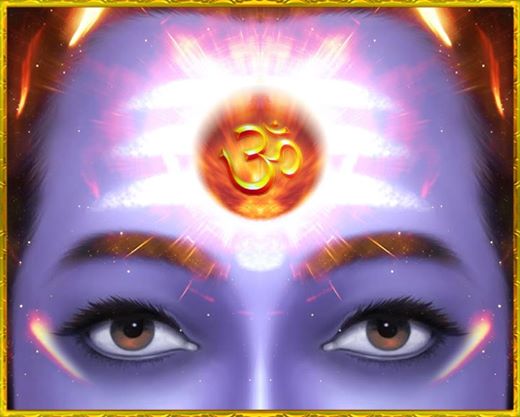
Shiva is often depicted with a third eye, with which he burned Desire (Kāma) to ashes, called "Tryambakam" (Sanskrit: त्र्यम्बकम् ), which occurs in many scriptural sources. In classical Sanskrit, the word ambaka denotes "an eye", and in the Mahabharata, Shiva is depicted as three-eyed, so this name is sometimes translated as "having three eyes". However, in Vedic Sanskrit, the word ambā or ambikā means "mother", and this early meaning of the word is the basis for the translation "three mothers". These three mother-goddesses who are collectively called the Ambikās. Other related translations have been based on the idea that the name actually refers to the oblations given to Rudra, which according to some traditions were shared with the goddess Ambikā. It has been mentioned that when Shiva loses his temper, his third eye opens which can reduce most things to ashes.

Rudra's transformation from an ambiguously characterized deity to a supreme being began in the Shvetashvatara Upanishad (400-200 BCE), which founded the tradition of Rudra-Shiva worship. Here they are identified as the creators of the cosmos and liberators of souls from the birth-rebirth cycle. The period of 200 BCE to 100 CE also marks the beginning of the Shaiva tradition focused on the worship of Shiva, with references to Shaiva ascetics in Patanjali's Mahabhasya and in the Mahabharata. Early historical paintings at the Bhimbetka rock shelters, depict Shiva dancing, Shiva's trident, and his mount Nandi but no other Vedic gods.

The legendary importance of Amarnath’s cave is related to the secret of immortality told to Lord Shiva’s wife Parvati. When Lord Shiva was insisted by his wife to reveal the secret of immortality, he decided to proceed towards the cave. On his way to the cave he did a few things, which were great according to his devotees. Because of these few things, the entire way to the cave became blissful. Actually, in order to reveal the secret of amar katha, Lord Shiva left his son, vehicle, etc in various isolated places, which is why all these places seem like tirthasthal. There are two ways for Amarnath journey – Pahalgam and Sonmarg Baltal. According to mythology, Lord Shiva took the Pahalgam route to reach the cave.